
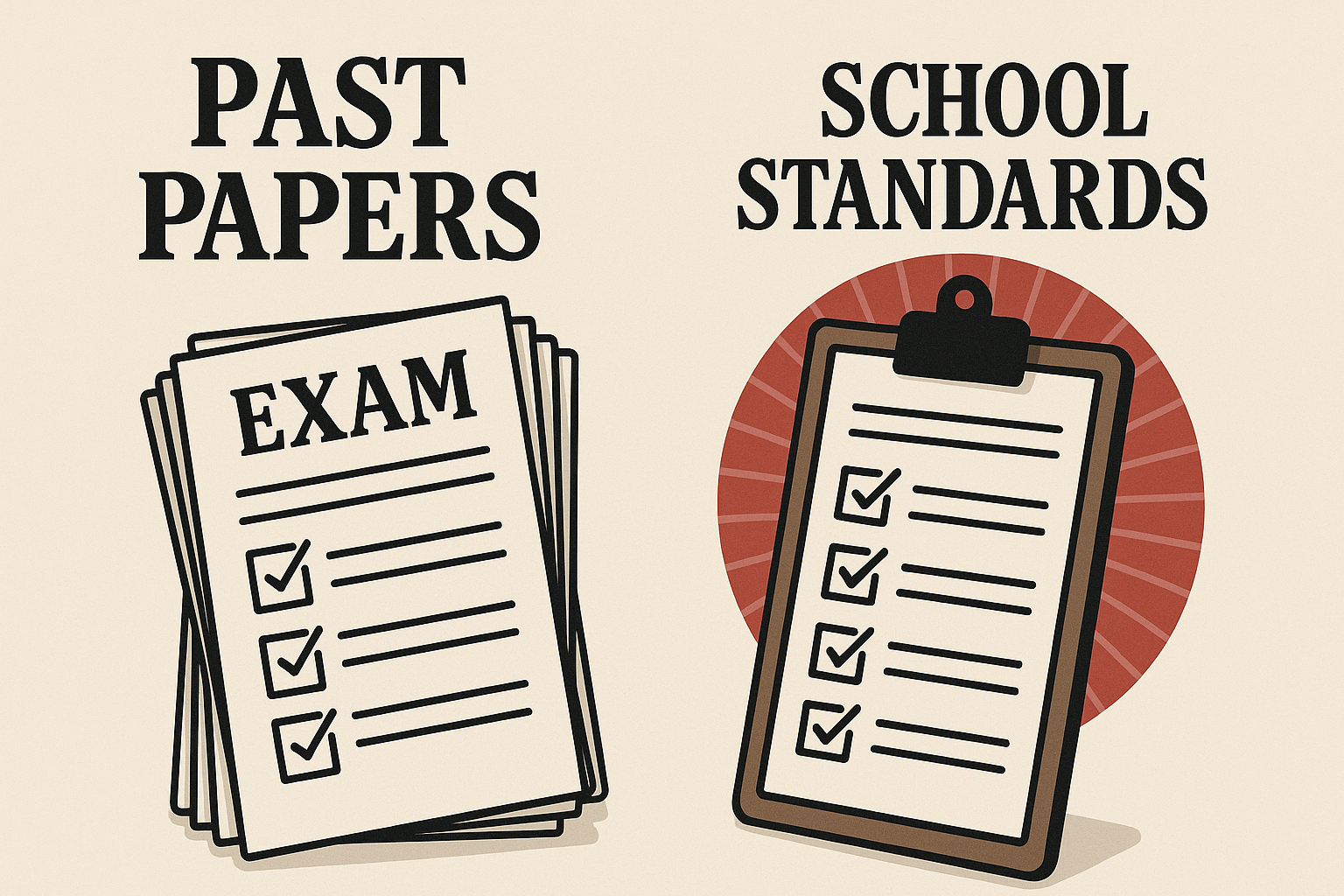
Supporting your child in the American school system can feel confusing. Every state sets its own standards, tests, and curriculum expectations. But once you know where to look, you can quickly find the official documents that matter: learning standards, test blueprints, released questions (similar to “past papers”), and scoring guides.
This cheat sheet gives you a simple national guide to finding the right resources in any U.S. state.
1. Start Here: Your State Department of Education Website
Every state has an official website where standards and assessments are published.
Search on Google for:
“[Your State] Department of Education Standards”
or
“[Your State] Released Test Questions”
Examples:
- California: cde.ca.gov
- Texas: tea.texas.gov
- Florida: fldoe.org
- Illinois: isbe.net
- New York: nysed.gov
The DOE site is always the most accurate source of information.
2. Find Your State’s Learning Standards (What Your Child Must Learn)
Look for sections labelled:
- Learning Standards
- Academic Standards
- Grade-Level Expectations
- Curriculum Frameworks
- State Standards by Subject
Standards outline the exact skills your child is expected to master in:
- English Language Arts (ELA)
- Mathematics
- Science
- Social Studies
- Additional subjects (varies by state)
Parent Tip:
Copy any confusing standard into ChatGPT and ask: “Explain this to me in simple terms.” This makes technical documents easy to understand.
3. Find Released Test Items (“American Past Papers”)
Most states release some version of:
- sample tests
- practice questions
- reading passages
- math problems
- writing prompts
- scoring rubrics
- sample student work
Look for these labels:
- Released Items
- Practice Tests
- Sample Questions
- Assessment Resources
- Item Bank
- Test Prep Materials
These show you exactly how your child will be tested.
4. Download the Assessment Blueprint (What Really Gets Tested)
Blueprints are one of the most valuable—but most overlooked—resources for parents.
Search for:
- Blueprint
- Assessment Design
- Test Structure
- Test Specifications
- Content Weights
Blueprints tell you:
- how many questions each skill area has
- what percentage of the test each topic counts for
- how difficult the questions are expected to be
- which question types are used (MCQ, short answer, extended writing)
This helps you focus your child’s study time on what matters most.
5. Understand the Format of State Tests
Every state test is slightly different, but most include:
- Multiple-choice
- Constructed-response (short-answer)
- Extended response (essays or explanations)
- Scenario-based tasks
- Technology-enhanced questions
Your DOE website often provides:
- test guides
- sample student responses
- scoring explanations
These help your child understand not just what to answer, but how to answer.
6. Use District-Level Resources Too
Your school district’s website often has:
- curriculum maps
- pacing guides
- parent roadmaps
- local practice tests
- teacher-written review sheets
Search for:
“[Your District] curriculum map”
“[Your District] parent resources”
This helps you see what your child’s specific teachers are covering week by week.
7. Combine State Resources With InstantTutor Insights
State standards and released items show:
- what your child should know
- and how they’ll be tested
InstantTutor shows:
- what your child is actually struggling with
- which topics they repeatedly ask about
- where their reasoning breaks down
- which subjects cause the most confusion
- where they improve week by week
Together, these give parents a complete, accurate picture of their child’s learning without needing to chase teachers.
8. Common Parent Mistakes (And How to Avoid Them)
❌ Looking only at homework
✔ Use standards + released tests to see the true expectations.
❌ Revising everything equally
✔ Focus on topics with the highest test weighting (from the blueprint).
❌ Waiting until spring to look at practice tests
✔ Start with one question per week, small steps create big gains.
❌ Thinking test scores reflect intelligence
✔ They reflect alignment with standards and practice.
9. The 10-Minute Weekly Parent Routine (Simple & Effective)
Use this routine to stay involved without overwhelming your child:
- Pick one released test question.
- Ask your child to explain their thinking aloud.
- Compare with the scoring rubric.
- Identify the skill behind the question (from state standards).
- Check InstantTutor insights to see if it matches their weak areas.
- Celebrate progress not perfection.
This routine improves learning more than hours of memorisation.
Final Thought: In the U.S., Knowledge Is Power for Parents
The U.S. system may be decentralised, but it is also transparent if you know where to look. Understanding your state’s standards and seeing real practice questions gives you a clear roadmap to help your child succeed.
With state resources showing what’s required and InstantTutor showing where your child needs support, you have everything you need to guide them confidently through the school year.
